
What’s going on in the woods in Marquand Park? The woods at Marquand Park are undergoing a restoration project to revitalize our old-growth forest and install a new interpretation of the historic Rhododendron Walk. This initiative is made possible by a generous gift from the Sidford-Schaeffer family, reflecting our ongoing commitment to stewarding the park for the future while honoring its history.
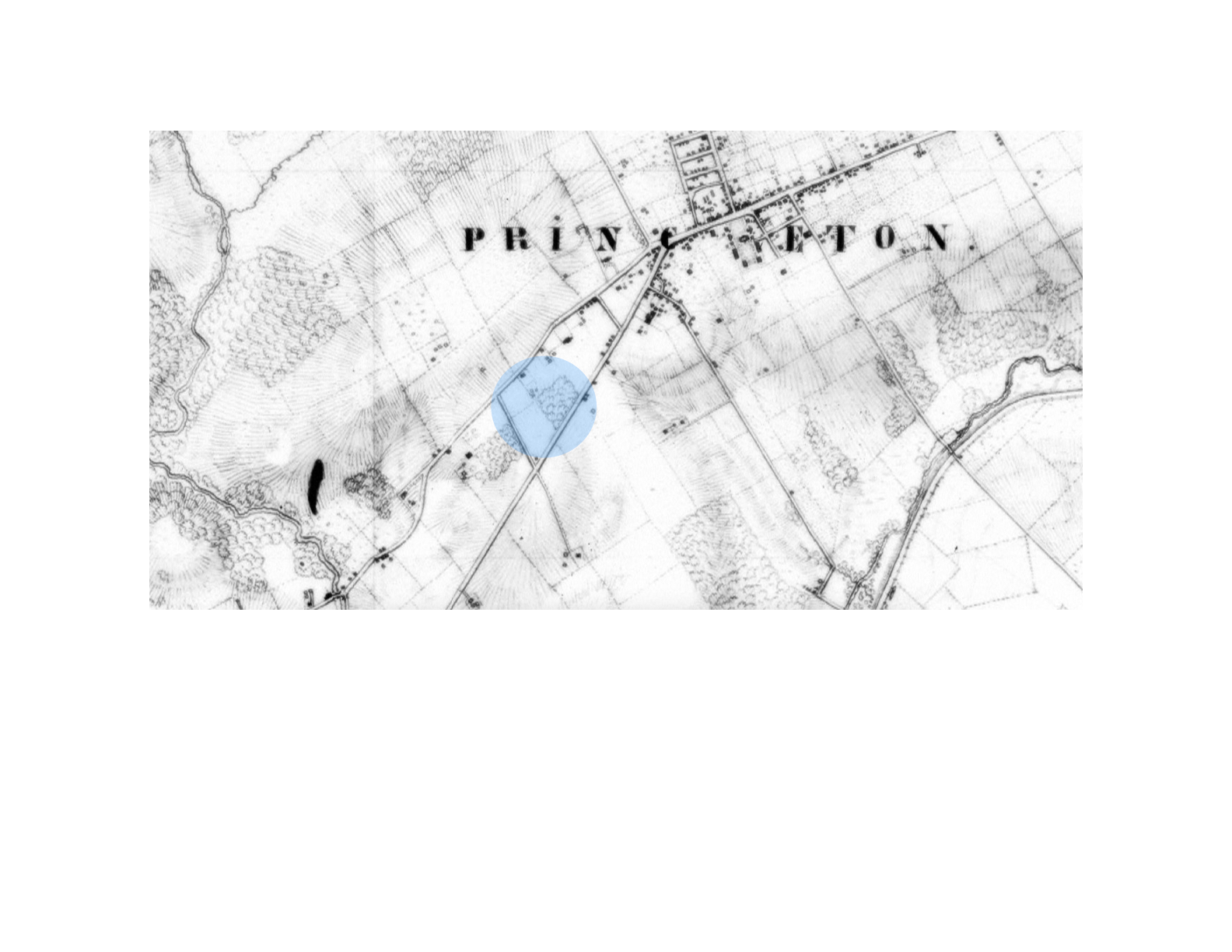
This old-growth forest is a rare and important survivor—one of the few remnant patches of Colonial-era woods in the immediate area. It historically served as a woodlot, providing the property with fencing, building materials, and firewood. Evidence of its long history includes historic maps showing woods in this corner of the park since before 1840, and dendrochronology that dated a fallen white oak to 1766.
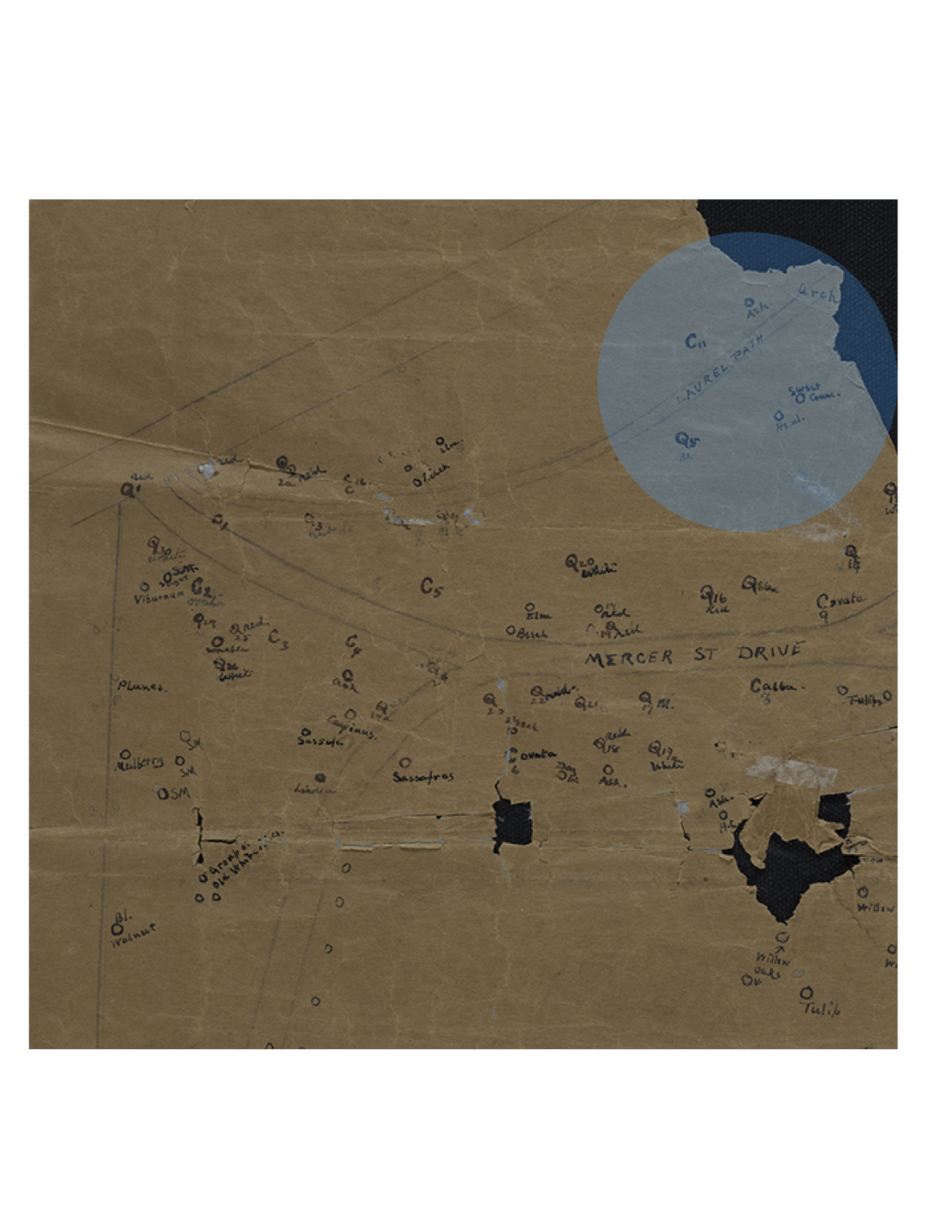
A map from the early 1900s drawn by Eleanor Marquand notes a "Laurel path" within the woods. It also noted the metal arches which held the rhododendron overhead. Remnants of these arch supports can still be seen peaking out from the ground along the path.
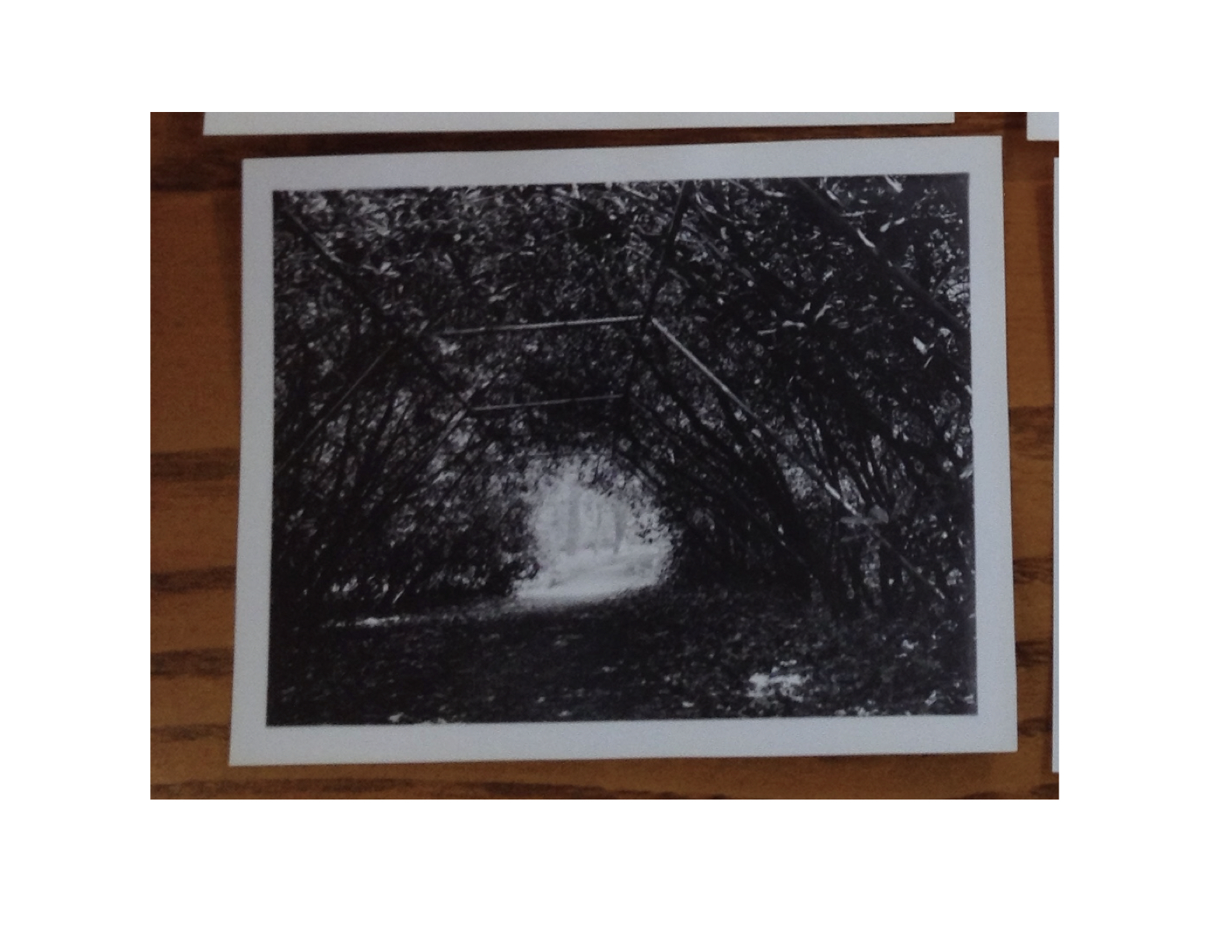
A photograph from 1928 captures the rhododendrons at their peak, showing them so large and dense that they formed a complete natural tunnel. While these massive shrubs eventually declined and their supporting metal arches deteriorated over time, many local residents still vividly recall the magical feeling of cycling or walking through that lush, shaded passage into the 1970s.
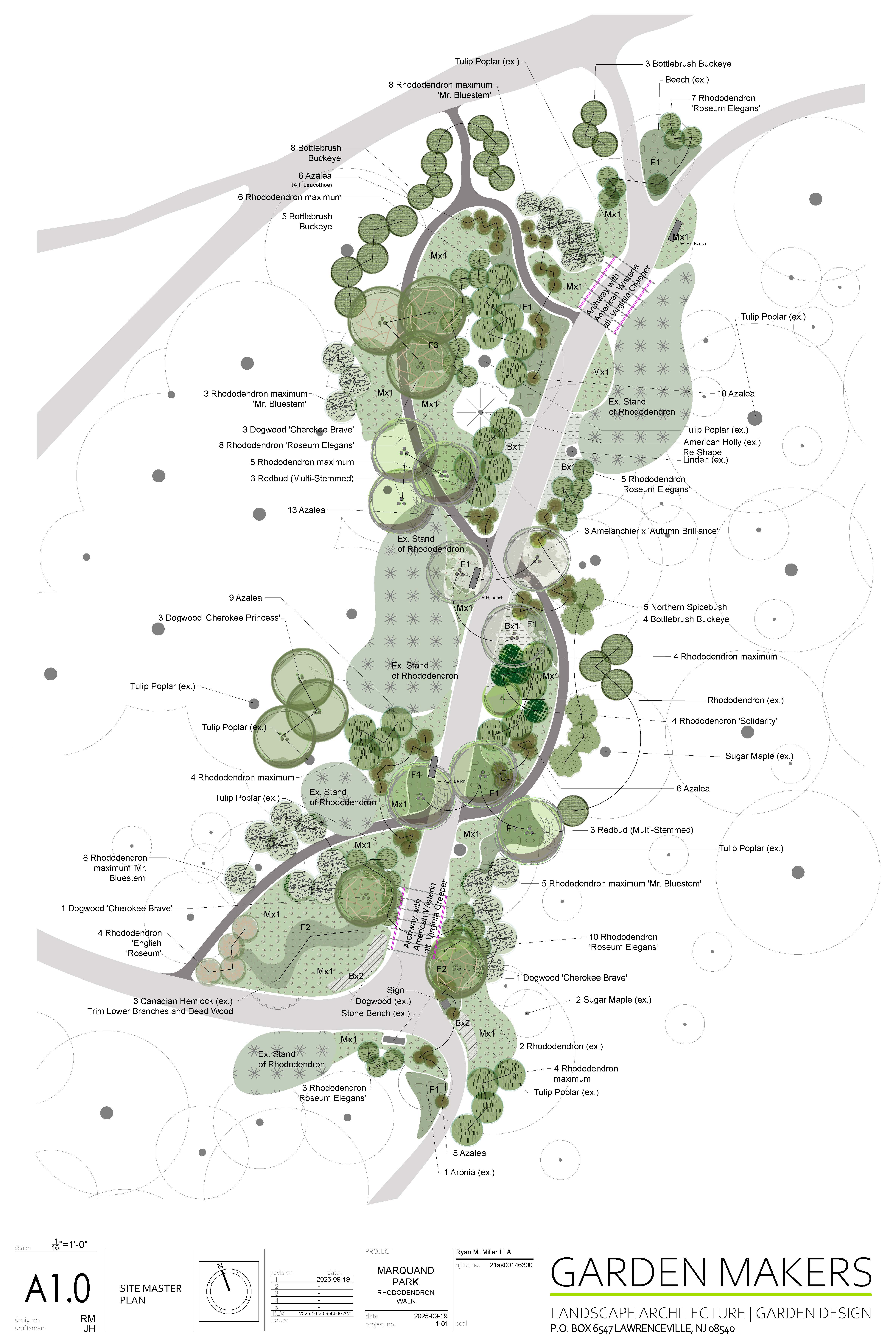
With the expertise of local design firm Gardenmakers, we are currently recreating that historic sense of enclosure by revitalizing the forest understory. After clearing invasive species, we introduced dozens of primarily native trees and shrubs alongside hundreds of perennials. New woodland trails now beckon visitors to wander, with small discovery paths designed specifically to inspire children to find their own way through the woods.
When the ground is covered in snow, the evergreens stand out as green beacons of hope on our landscape.
As part of our Educational Initiative this year we added 2 children's programs and the recent “Pines and Needles” was a fun, educational albeit chilly event. But it was an opportunity to get the kids outside in winter, learn about evergreen trees and visit a new area of the park.

Marquand Park’s Pinetum is a wonderful collection of pine, spruce, fir and hemlock among many other evergreen species. Here you will find over eight species of spruce, seven different pines and many other rare specimens.
Children were able to hunt for the four listed evergreen species and match pine cones and needles to the pictures. It was an enjoyable different type of treasure hunt. Also they had the opportunity to make Pine Cone birdfeeders and play pine cone bocce ball.

We were also lucky to have volunteers from the Hun School’s Earth Science Observation Club who added their insight and enthusiasm for the great outdoors.

Thank you Town Topics, who covered the event, and featured us in Question of the Week
“And many strokes, though with a little axe, hew down and fell the hardest-timbered oak.” This line from Shakespeare’s King Henry VI, Part 3, refers to how even the mightiest tree can be worn down by persistent effort. Bacterial Leaf Scorch (BLS) is the little axe attacking our oaks. Periods of drought exacerbate the infection and spread of this systemic disease caused by the bacterium Xylella fastidiosa, which invades the xylem (water and nutrient-conducting tissues) of susceptible trees. Along the path leading past the ice house to Mercer street, our “oak alley,” has suffered a couple of losses - although they might not all be attributable to BLS. We continue to monitor the most majestic of our heritage trees. However, as we grapple with these losses, we find some silver linings in our arboricultural practices to demonstrate to park visitors.
Let’s start with a fallen giant, a white oak that was lost in a storm a number of years ago. Taylor Sapudar, Princeton’s municipal arborist, saved a slice of tree rings which was analyzed by Daniel Druckenberg, PhD. of Rider University. Using dendrochronology, he dated our oak to 1766 - it started its long life under the British crown! You can read more about it in this blog post.

Along the path you may have noticed an obviously dead tree, a red oak, we have left deliberately standing. Called a snag, this tree remains upright and is allowed to decompose naturally. It provides a habitat for birds, insects, fungi and other wildlife such as bats.Taylor Sapuder’s infographic from the Mayor’s newsletter a few years ago clarifies this approach.

In addition to municipal park staff, Todd Pearson of Forest Glenn Arborists provides care for our trees. He is working with us and the town to make sure the snag of the red oak decomposes safely, stating, "Leaving a dead tree trunk standing transforms loss into life — it becomes a shelter for birds, insects, and small mammals, turning decay into a thriving wildlife habitat." The plan is to implement a coronet cut, a series of jagged cuts which will encourage nesting birds by mimicking natural breakage and promote ecological benefits. Several vertical pockets will be created for nesting bats and birds. In addition they will cut two nesting boxes into the snag for owls or other larger birds.

During one of their quarterly inspections, arborists noticed a large shear crack in a huge black oak. As this was one of our treasured large oaks, we decided it merited an intervention. This will give it a few more years, maybe decades, of life. Todd and his crew thinned the crown taking weight off the strained limbs. Then they installed screw rods to hold the tree together. They will slowly tighten the screws - like braces! Eventually the split will heal. Todd explains, "When we install screw rods into a split tree, we’re not just putting in hardware — we’re giving that tree a second chance. The rods will help hold the trunk together so it doesn’t tear apart under stress, and that means we keep the tree safe, the park protected, and ourselves out of harm’s way."

Although our proud oaks are suffering we are doing all we can to keep them healthy. If they do die we aim to make them a part of the landscape and gain a deeper understanding of the history of the park.
Read here all about our busy year at Marquand Park!

Page # 1 |
||